

If you're trying to pick a diffuser and the options aren't making it any clearer, you're not alone. Ultrasonic, nebulizing, and cold-air diffusers all scent a room, but they do it in very different ways and the difference matters more than most people realize.
Ultrasonic diffusers mix fragrance oil with water and use vibration to create a mist. Nebulizing diffusers atomize pure oil without water for a more concentrated scent. Cold-air diffusion, the technology behind luxury hotel scenting, goes a step further: pressurized filtered air disperses a dry mist of undiluted fragrance with no heat and no water. For most homes, cold-air diffusion is the right answer, but the best fit depends on your space, your budget, and what you want the scent to do.
This article breaks down how each type works, where they differ in ways that affect daily use, how to match the technology to your space, and which Hotel Collection diffuser fits each situation.
How Each Diffuser Type Works
The three diffuser types are created with the same goal, but they all achieve their goal using a different technology. Understanding the mechanism behind each one will help you understand which one makes the smell lighter, which one requires more cleaning, which one can cover a whole floor, and which one is best kept in a single room.
Ultrasonic. An ultrasonic diffuser combines fragrance or essential oil with water inside a reservoir. A small plate vibrates at ultrasonic frequency, breaking the water and oil mixture into a cool mist that disperses into the room. The result adds humidity to the air along with fragrance. Because the oil is diluted by water, the scent tends to be lighter than what you get from the bottle, and the throw is better suited to smaller enclosed spaces.
Nebulizing. A nebulizing diffuser removes the water entirely. A pressurized air stream passes over a tube containing pure fragrance oil and atomizes it into fine particles that disperse without heat and without a water carrier. The scent is more concentrated and more faithful to the oil's original profile because nothing dilutes it. Nebulizing diffusers typically cover more ground than ultrasonic models and require no water reservoir.
Cold-air diffusion. Cold-air diffusion is the premium implementation of nebulizing technology. Filtered cold air under pressure atomizes pure fragrance oil into a dry mist of micro-particles with no heat, no water, and no residue. Because the oil is never heated and never diluted, the fragrance composition stays fully intact from the first use to the last drop. This is the technology Hotel Collection uses across its full diffuser lineup, and it is the technology choice behind the scent identities of luxury hotel properties.
The technology gap between the three types shows up in five areas where real-world performance diverges. The table below maps each type against the dimensions that affect daily use.
|
Ultrasonic |
Nebulizing |
Cold-Air (Hotel Collection) |
|
|---|---|---|---|
|
How it works |
Water plus ultrasonic vibration |
Pressurized air plus pure oil |
Filtered cold air plus pure oil, no heat |
|
Scent intensity |
Light (oil diluted by water) |
Concentrated |
Concentrated, full oil profile intact |
|
Coverage area |
Suited to smaller spaces |
Suited to single rooms and mid-size spaces |
600 sq ft (Studio) to 6,000 sq ft (Double Presidential) |
|
Adds humidity |
Yes |
No |
No |
|
Maintenance |
Frequent draining, rinsing, and descaling |
Periodic cleaning |
Minimal; no water tank to clean |
|
Noise |
Near-silent |
Low motor hum |
Low motor hum |
For modest scent presence in a small, enclosed room with the added benefit of humidity, ultrasonic is adequate. For pure oil fidelity, larger coverage, and minimal upkeep, nebulizing and cold-air outperform ultrasonic on every practical dimension.
Why Cold-Air Diffusion Is the Standard for Luxury Home Scenting
Cold-air diffusion is the technology behind the scent identities of luxury hotel properties because it solves a problem the other two types cannot: how to distribute fragrance at scale without altering it.
Heat alters fragrance compounds. An ultrasonic diffuser does not use heat, but the water dilution flattens the scent profile and limits throw. Cold-air diffusion sends the oil into the air intact, as a dry mist of micro-particles that stay suspended longer because they carry no water weight. The scent that arrives in the far corner of the room is the same scent that left the diffuser. This is why a hotel lobby smells the way it does from the moment you walk through the door.

Hotel Collection's free diffuser offer includes the Studio Scent Diffuser at no cost with a 6-month oil subscription, which makes trying cold-air diffusion at home a reasonable entry point for anyone comparing technologies.
How to Choose Based on Your Space
The right diffuser type for you depends on the space you want scented and your particular needs.
Small room, modest expectations, humidity welcome. An ultrasonic diffuser with its fine mist covers a bedroom or small office well. If the scent does not need to be particularly concentrated and you are working with a tight budget, ultrasonic is a reasonable starting point. Expect lighter scent, more frequent cleaning, and a shorter throw.
Single room, pure oil scent, no humidity. Nebulizing gets you there. The scent profile is more faithful to the oil, the maintenance is lower, and there is no mist to worry about near wood surfaces or textiles.
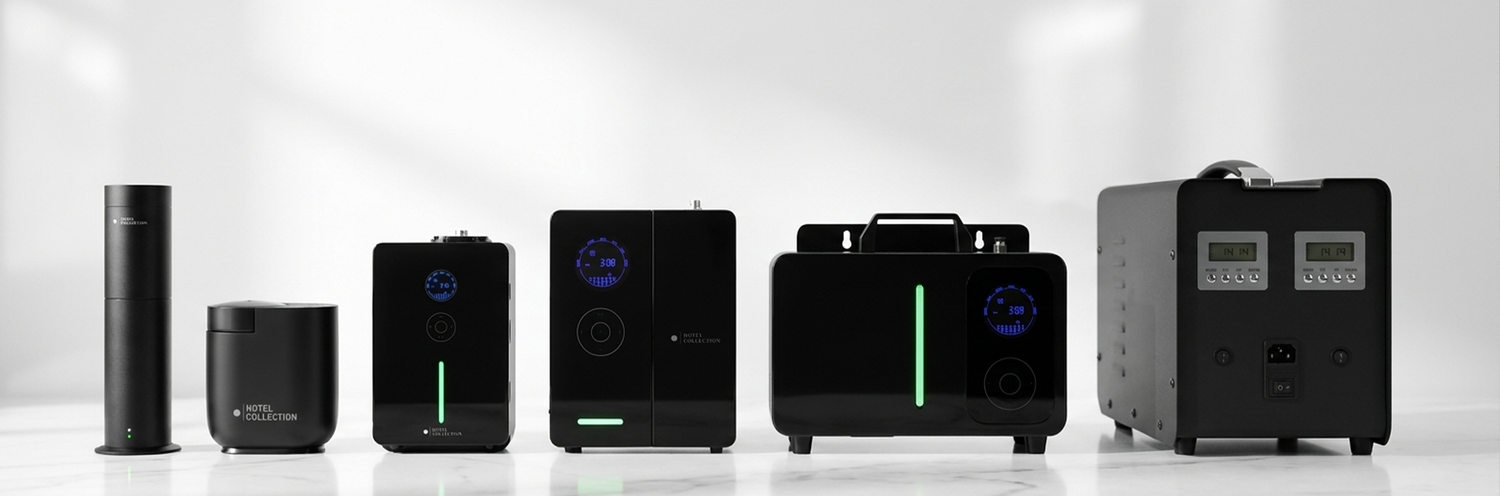
Whole-home, hotel-quality consistency, luxury fragrance fidelity. Cold-air diffusion is the right technology. Hotel Collection's lineup scales by room: Studio covers up to 600 sq ft for a single living room or open-plan space; Penthouse handles up to 1,200 sq ft; Villa covers 1,800 sq ft; Presidential covers 3,000 sq ft; and Double Presidential covers up to 6,000 sq ft for multi-zone homes or full floors.
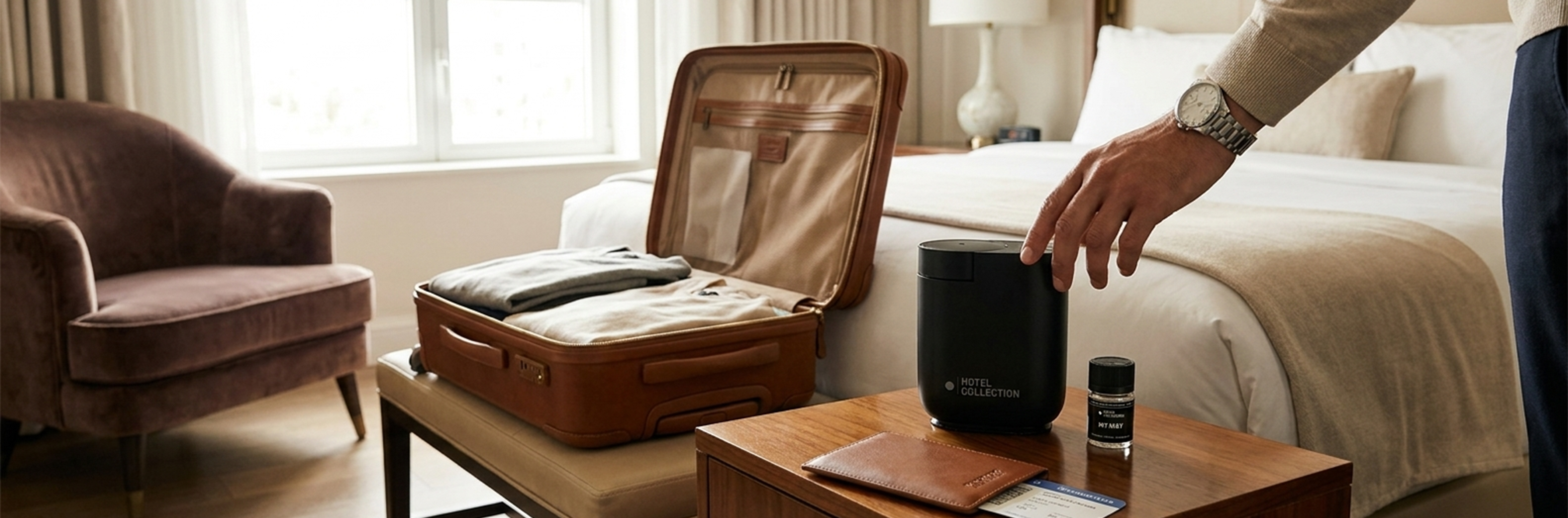
Portable. The Loft Portable Scent Diffuser is Hotel Collection's cordless, portable option. Designed for rooms up to 400 sq ft, the portable, rechargeable design allows you to create your signature ambiance from room to room.
|
Diffuser |
Coverage |
|---|---|
|
Studio Scent Diffuser |
Up to 600 sq ft |
|
Penthouse |
Up to 1,200 sq ft |
|
Villa |
Up to 1,800 sq ft |
|
Presidential |
Up to 3,000 sq ft |
|
Double Presidential |
Up to 6,000 sq ft |
|
Loft Portable |
Cordless, portable |
The simplest rule: match the technology to what you want the room to feel like, not just what the device costs upfront.
Why Hotel Collection's Cold-Air Diffusion Is Right for Your Home
Cold-air diffusion covers more ground, requires less upkeep, and delivers the full scent profile of the oil without diluting it with water or altering it with heat. That's why it's the technology behind the scent identities of luxury hotel properties, and it's why Hotel Collection builds its entire diffuser lineup around it.
If Hotel Collection's cold-air diffusion sounds right for your space, the diffuser collection is the place to start. Compare the coverage tiers, the formats, and the fragrance library, and enjoy the luxurious atmosphere from your home.
Frequently Asked Questions About Ultrasonic vs Nebulizing vs Cold Air Diffusers
What is the main difference between an ultrasonic diffuser and a cold-air diffuser?
An ultrasonic diffuser mixes fragrance oil with water and uses vibration to produce a mist; the fragrance is diluted and the scent tends to be lighter. A cold-air diffuser uses pressurized filtered air to atomize pure fragrance oil without water or heat, so the full oil profile reaches the room intact. Cold-air diffusers also cover more ground and require less frequent cleaning because there is no water tank.
Do cold-air diffusers require water?
No. Cold-air diffusion uses no water. The technology disperses pure fragrance oil as a dry mist of micro-particles using filtered cold air under pressure. There is no reservoir to fill, no humidity added to the room, and no descaling required. This is one of the primary advantages over ultrasonic technology, particularly in spaces with high-end textiles, art, or wood finishes.
How do I know what coverage area I need?
Match the diffuser's coverage rating to the square footage of the space you want to scent. Hotel Collection's Studio scent diffuser covers up to 600 sq ft, which suits most open-plan living rooms. Penthouse (1,200 sq ft) and Villa (1,800 sq ft) handle larger spaces or open-plan homes. If you are scenting multiple rooms or full floors, the Presidential (3,000 sq ft) and Double Presidential (6,000 sq ft) cover whole-home applications.
Can I use any fragrance oil in a cold-air diffuser?
Cold-air diffusers are designed for pure fragrance oils, not diluted products or water-soluble blends. Hotel Collection's diffusers are designed for their own fragrance oil formulations, which are built to work with the cold-air diffusion mechanism. Using oils not formulated for the system can affect performance. Hotel Collection's oils are available in 30 mL, 120 mL, 200 mL, and 500 mL sizes to match different diffuser models and usage patterns.
Is a cold-air diffuser the same as a humidifier?
No. A humidifier is designed to add moisture to the air, not to scent it. Some electric diffusers, particularly ultrasonic models, do humidify the air as a byproduct of their mist-based diffusion method, but that's a side effect rather than the purpose. Cold-air diffusers disperse a dry concentrated mist of pure fragrance oil with no water, so they scent the room without affecting humidity levels at all.
Can I use essential oils in a cold-air diffuser?
Cold-air diffusers are designed for pure fragrance oils, and not all essential oils are formulated to work with this diffusion method. Many electric diffusers marketed for essential oils use ultrasonic or heat-based technology, which dilutes or alters the oil before it reaches the room. Hotel Collection's diffusers are designed specifically for their fragrance oil formulations to ensure the full scent profile comes through consistently.
Are cold-air diffusers quiet?
Yes. Cold-air diffusers run on a low motor hum that most people find easy to ignore in normal use. They're not completely silent the way some ultrasonic models are, but the quiet operation is comparable and rarely noticeable in a furnished room. If near-silent operation is a priority, ultrasonic diffusers have a slight edge, though the tradeoff is a lighter, more diluted scent.