

![Retail Scent Marketing: Complete Guide to Scent for Retail Stores [2026]](http://www.hotelcollection.com/cdn/shop/articles/retailscentmarketing.png?v=1776287290&width=1500)
Retail scent marketing is the strategic use of fragrance to influence customer behavior, increase dwell time, and drive measurable sales lifts of 11% or more. It's deployed intentionally, often invisibly, and calibrated to the brand's target customer and physical environment.
It's worth separating this from aromatherapy or generic air freshening. A lavender plug-in near the door is not scent marketing. A signature fragrance diffused at a controlled intensity throughout your store, designed to slow customers down and create a subconscious sense of comfort, is. The industry also uses "olfactory marketing" and "scent branding" interchangeably, and they all point to the same discipline: using smell as a deliberate part of the customer experience.
How to Implement Retail Scent Marketing in Your Store
Step 1: Define Your Brand Scent Identity - Match fragrance to your brand values, target customer, and the emotional experience you want to create. Test before you commit. Hotel Collection's fragrance sample page lets you evaluate options in your actual space before investing in a full deployment.
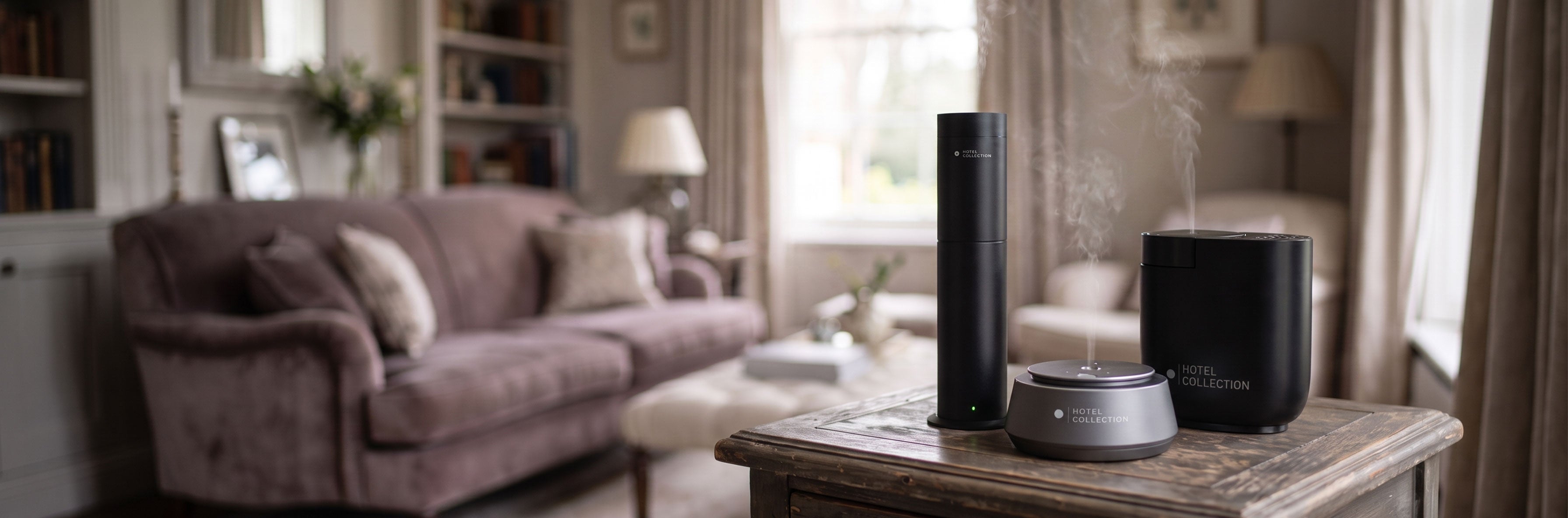
Step 2: Choose the Right Diffusion Technology - Hardware should match your space. Compact spaces work well with the Tower Pro (scents up to 800 sq ft). Mid-size retail environments are well-suited to the Presidential Scent Diffuser, which covers up to 3,000 sq ft via HVAC, or the Double Presidential for spaces up to 6,000 sq ft. You can browse both in Hotel Collection's large diffuser collection.
Step 3: Map Strategic Scent Zones - Product zones can use scent to improve customer experience. For instance, at checkout, a familiar scent can reduce perceived wait time. Vary the intensity by zone before varying the scent itself.
Step 4: Test, Measure, and Optimize - Track dwell time, conversion rate, average transaction value, and return visit rate before and after implementation. Run the scent for at least 30 days before drawing conclusions, and refresh quarterly to align with campaigns and prevent nose fatigue among regular customers.
Best Scents for Different Types of Retail Stores
The right fragrance depends on your customer, your product category, and the emotional response you want to create. Here's how different store types map to scent families and outcomes.
|
Store Type |
Recommended Scent Family |
Customer Effect |
HC Recommendation |
|---|---|---|---|
|
Luxury Boutique |
Woody, Leathery |
Perceived quality, exclusivity |
|
|
Bookstore / Lifestyle |
Fresh, Floral |
Comfort, extended browsing |
|
|
Fitness / Wellness |
Citrus, Eucalyptus |
Energy, mental clarity |
|
|
Home Décor |
Warm Spice, Sandalwood |
Nesting instinct, aspiration |
|
|
Grocery |
Fresh, Clean |
Appetite stimulation, trust |
|
|
Electronics / Tech |
Subtle, Clean |
Focus, reduced anxiety |
|
|
Spa / Beauty |
Floral, Soft Musk |
Relaxation, sensory alignment |
Scent doesn't have to be static. Rotating your fragrance seasonally aligns the sensory atmosphere with your marketing calendar and the power of scent keeps the environment feeling fresh for regular customers. Keep the transitions gradual and you won't lose the subconscious familiarity your regulars have built with your space over time.
Hotel Collection's Retail Scent Solutions
Hotel Collection occupies a unique position in commercial scenting. It's built around the same luxury fragrance DNA found in five-star hotel lobbies, and it has brought that experience to retail and commercial environments at scale.
A complete retail scenting ecosystem.
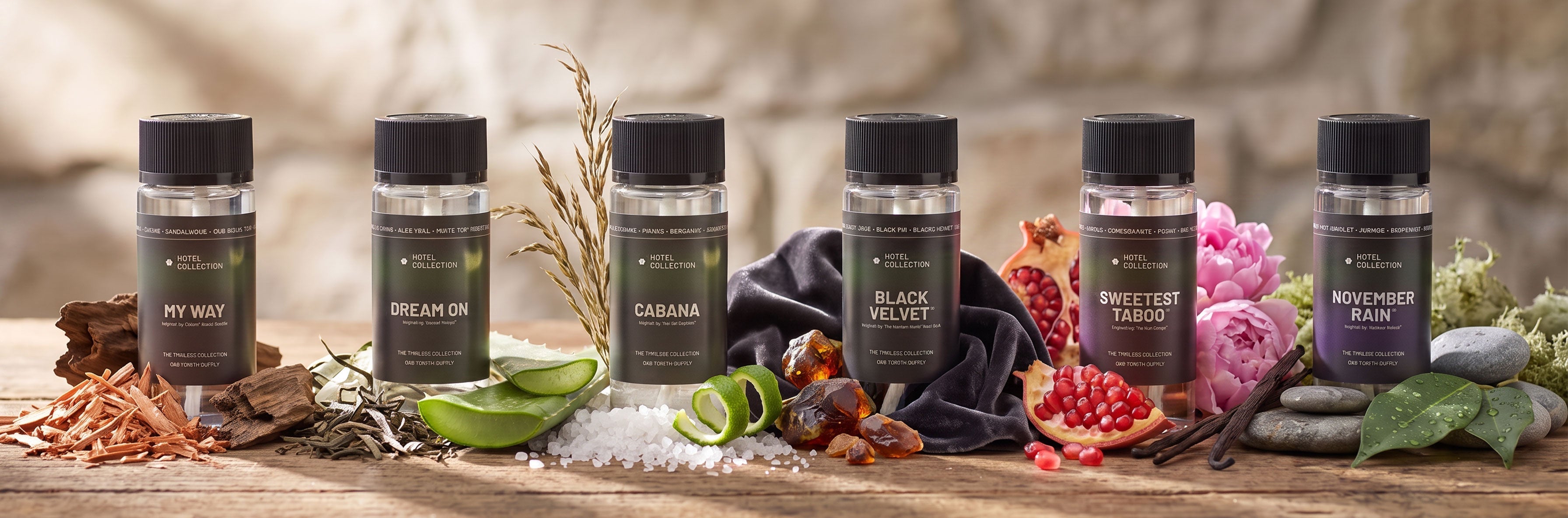
The product range covers everything from single-room boutique setups to full HVAC-integrated deployments, with 111+ professionally formulated diffuser oils, private labeling, and wholesale options.
Shop for your signature scent →
Diffusion technology built for retail
Hotel Collection uses cold-air diffusion technology, which converts fragrance oil into a dry nano-mist without heat or water. That matters in retail settings because there's no residue on merchandise, no added humidity near electronics or fabrics, and no need for daily maintenance. The scent also stays suspended in the air longer than ultrasonic alternatives, creating a consistent experience throughout the day.Shop all diffusers
Trusted by leading brands
Hotel Collection is trusted to help create signature scents for some incredible commercial clients, while brand collaborations with Disney, the NBA, and Star Wars signal credibility that extends well beyond the hospitality world.
Four Types of Retail Scent Marketing Strategies
Ambient Scenting
This involves diffusing a consistent signature scent in the background throughout the entire store. You're not trying to draw attention to the scent, but rather creating an environment that feels pleasant, controlled, and on-brand. It works best in grocery stores, department stores, and malls where the goal is to improve the overall experience. Bloomingdale's is a well-known retail space example done at scale.
Signature Scent / Scent Branding
A signature scent is a proprietary fragrance developed specifically for a brand and designed to be recognized as a "scent logo" over time. Westin Hotels' White Tea scent is one of the most cited examples in the industry. Customers who've stayed at a Westin recognize that custom scent immediately, and Westin sells it so guests can recreate the experience at home. For luxury retail and flagship stores, this kind of identity-level scenting builds memorability and emotional connections that's hard to achieve through visual branding alone.
Thematic Scenting
Thematic scenting rotates by season or matches the product zone nearby. A fashion retailer might use a fresh, grassy scent during spring arrivals and shift to something warmer for fall. Effective scenting like this, gives customers a sensory cue that something in the store has changed, which is a soft but powerful tool to get customers to return.
Aroma Billboards
An aroma billboard is a strong, distinctive entrance scent used to signal brand identity the moment someone walks in. It works well for boutiques, pop-up shops, and mall kiosks where you need to make an impression fast. Cinnabon has built an entire wayfinding strategy around this idea: you smell it before you see it, and that's by design. They are a brilliant example of scent marketing.
Brand Case Studies: Retail Scent Marketing in Action
Nike is the benchmark ROI case. The 84% purchase intent lift in scented vs. unscented environments remains the most cited single-study proof point for the category.
Bloomingdale's takes a zoned approach, matching fragrance to product category. Baby powder near the infant section, sunscreen near swimwear. It deepens the sensory connection between the scent and the nearby merchandise, making each department feel more distinct.
Starbucks eliminated food smells that were competing with coffee so the signature roasted aroma could dominate. It's a useful example of scent used as an editorial decision, not just an additive one.
The Science and ROI of Scent Marketing
How the Olfactory System Drives Purchasing Decisions
Scent is processed differently than any other sense. When you smell something, the signal travels directly to the limbic system, which is responsible for emotion and memory, before it ever reaches the rational mind. Researchers call this the Proust effect, named after the writer's famous account of a childhood memory triggered by the smell of a madeleine. It means scent can produce an emotional response before you've had a chance to think about it, and that's something visual and audio marketing simply cannot replicate.
Research Studies Every Retailer Should Know
The research on scent's effect on consumer behavior and emotional connections to a brand is consistent across decades of independent study.
- A Nike store study found an 84% increase in purchase intent in scented environments compared to unscented controls.
- Washington State University researchers documented a 20% increase in customer spending in stores using simple ambient scenting, published in the Journal of Retailing.
- Samsung found that customers in scented environments underestimated their wait time by 26%, which translates directly to reduced frustration and better brand perception.
- According to Mood Media, 75% of daily emotions are influenced by smell, and scent recall after one year sits at 65% compared to 50% for images.
- Bespoke fragrance house Maison 21G identifies peppermint, cinnamon, citrus, vanilla, and lavender as scents particularly effective at attracting customers, creating brand loyalty and encouraging spending, which aligns with broader research on how ambient fragrance shapes mood and boosts sales.
Ready to Add Scent Marketing to Your Business?
A sense of smell isn’t the only direct line to emotion and memory. Scent helps bypass the rational filters that other marketing channels have to work through. Retailers who use it thoughtfully gain a competitive advantage that customers feel without being able to name.
Hotel Collection's Business Scenting services is the right starting point. You can explore hardware options, request samples, and connect with or expert scent consultants on a strategy and design a custom scent for your specific space.
Frequently Asked Questions About Retail Scent Marketing
What is retail scent marketing?
Retail scent marketing is the strategic use of fragrance in a store environment to influence customer behavior, increase dwell time, and improve sales. It's distinct from air freshening in that it's intentional, calibrated to the brand, and tied to specific business goals.
What scents attract customers and encourage spending?
Scents associated with increased purchasing include peppermint, cinnamon, citrus, vanilla, and lavender. The right choice depends on store type. Luxury boutiques perform well with woody or leathery profiles, while grocery environments benefit from clean, fresh scents.
How much does retail scent marketing cost?
Hardware costs vary by the size of your space. Hotel Collection offers options from compact boutique-scale diffusers to HVAC-integrated systems covering up to 6,000 sq ft. Given documented ROI in the 11%+ range, most retailers find the investment favorable compared to other in-store experience upgrades.
What's the difference between a cold-air diffuser and an ultrasonic diffuser for retail?
A cold-air diffuser converts fragrance oil into a dry nano-mist without heat or water, leaving no residue on merchandise and requiring less frequent maintenance. Ultrasonic diffusers use water and vibration to create a mist, which demands more regular cleaning and can add unwanted humidity. For most retail environments, cold-air systems are the more practical choice.
How do I choose the right scent for my store?
Start with your brand identity and target customer, then test before committing. Hotel Collection's fragrance sample page lets you evaluate options in your actual space before selecting a direction.