

Sandalwood smells warm, creamy, and woody, with a softness that sets it apart from every other wood note in perfumery. It's not sharp or piney. It's the note that reads as atmosphere before it reads as scent, which is why it shows up in nearly every luxury hotel lobby you've ever walked through and felt something you couldn't name.
This article covers what sandalwood actually smells like at a level of detail that lets you recognize it, why it works so well in large spaces, which rooms it suits best at home, and three Hotel Collection fragrance oils where it plays the lead role.
What Sandalwood Actually Smells Like
The sandalwood scent is warm, creamy, and woody, with a smoothness that sets it apart from every other wood note in a perfumer's toolkit. It is not sharp like cedarwood, not smoky like oud, not green like pine. The single best descriptor is creamy, but the more complete picture is warm, soft, faintly sweet, and almost skin-like, with a low, balsamic depth underneath that anchors the whole impression.
The reason most people recognize sandalwood without being able to name it is that it rarely appears in isolation. In a fragrance composition, sandalwood functions as a fixative: is often used to support florals, citrus, musks, vanilla, and amber. When you smell a fragrance with unusual warmth you cannot quite place, sandalwood is frequently the reason. It is not the loudest note in the room. It is the note that makes every other note last longer.
That roundness is also what distinguishes sandalwood from drier wood notes. Cedar reads as pencil shaving when unblended. Sandalwood stays smooth, holds its character from first use through the dry-down, and usually stays smooth as it fades.
Shop Hotel Collection fragrance oils
Why Sandalwood Is the Scent of the Hotel Lobby
Sandalwood appears in luxury hotel scent identities more than almost any other note because of one quality: it makes a space feel considered without calling attention to itself. A lobby scented with sandalwood smells intentional. It is the olfactory equivalent of a room that is beautifully designed without looking decorated.
Hotel scent strategy, at its best, is not about making a property smell like a product. It is about giving a space a signature the guest remembers without being able to describe. Sandalwood is the note best suited to that goal because it arrives slowly, reads as warmth and depth rather than fragrance, and stays present long after the source has been removed. Those qualities are identical to what makes a well-designed home feel like somewhere worth returning to.
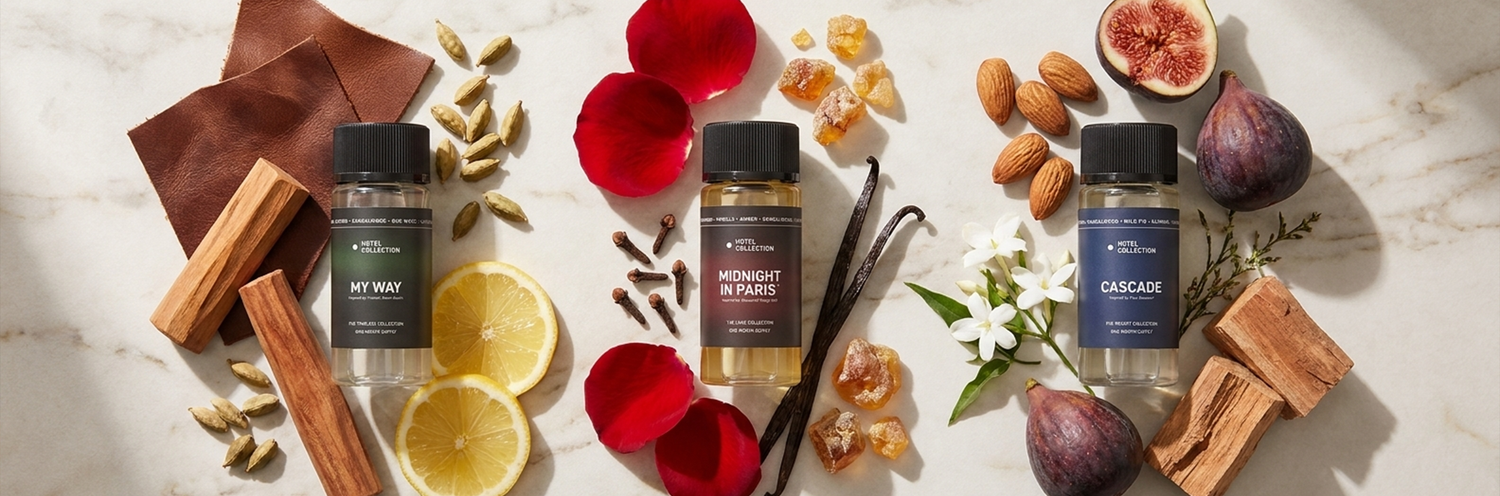
My Way is one of Hotel Collection’s best-known fragrance oils and is inspired by 1 Hotel®. Sandalwood anchors the composition beneath leather, iris, and amber, creating a presence that reads as polished and deeply settled at the same time. It has earned 4.9 out of 5 stars on over 3000 reviews, making it the most-reviewed product in the Hotel Collection catalog. What people are responding to is not the complexity of the notes in isolation. It is that, like the lobby it was built to evoke, it feels like somewhere you would want to stay.
Sandalwood as a Base Note: Why It Lasts
Every fragrance unfolds in three layers. Top notes are the first impression: bright, light, and fast to fade (citrus, light herbs, green notes). Heart notes emerge as the top notes lift (florals, spice, warm woods). Base notes arrive last and linger longest: sandalwood, cedarwood, vetiver, amber, and musk.
Sandalwood's low volatility means it evaporates slowly and stays suspended long after lighter notes have gone. This is why the version of the fragrance you experience often becomes more sandalwood-forward in the dry-down. A room scented with a sandalwood-based oil tends to feel warmer and more settled the longer you are in it.
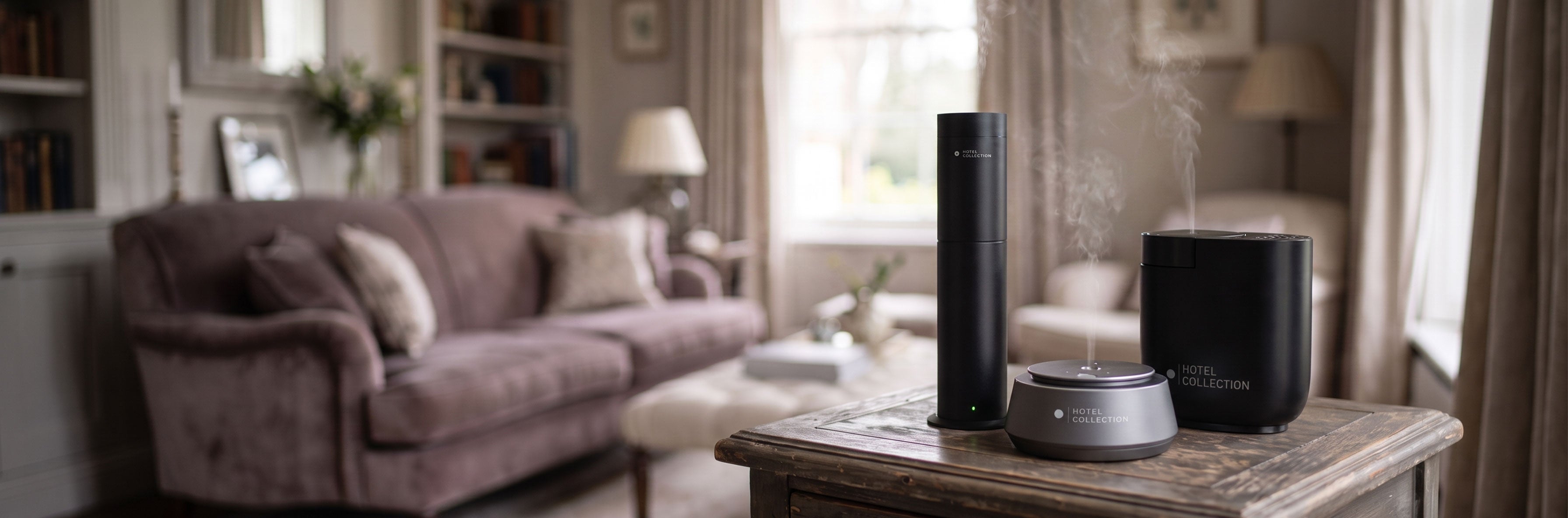
The delivery format shapes how sandalwood expresses itself. Cold-air diffusion keeps the fragrance oil intact without heat, preserving the full top-to-base arc and preventing the chemical breakdown that can make certain notes read harsh over time. A cold-air diffuser oil gives the clearest, most consistent expression of the composition. Reed diffusers deliver a gentle, continuous release that keeps the base note ambient and low-level, well suited to spaces you move through rather than occupy. Candles amplify warmth and throw, which suits sandalwood's character and creates a more saturated, occasion-specific presence.
Explore Hotel Collection diffusers
The Best Rooms for Sandalwood and Which Format to Use
Sandalwood works in almost any room, but it performs best where you want a sense of arrival or a settled, considered atmosphere.
Entry and living room. This is the strongest use case. A cold-air diffuser oil in the entry or main living area sets a signature the moment someone walks in, exactly as a hotel lobby does. Sandalwood-based scents in these spaces create the impression that the home has been thought about, that the air did not land this way by accident.
Primary bedroom. Warm sandalwood compositions suit evening use well. Its longevity means it holds through the night without becoming fatiguing. A candle works for the ritual of settling in; a diffuser oil for continuous overnight presence.
Home office. Sandalwood at low diffusion is well suited to focused work. It adds atmosphere without competing for attention. A reed diffuser provides passive, minimal presence; a cold-air diffuser at low intensity gives you slightly more control.
Bathrooms. Lighter sandalwood blends, where sandalwood is a supporting note rather than the lead, work well in smaller ventilated spaces. Avoid heavy, rich compositions in tight bathrooms.
If you want to see what a free cold-air diffuser makes possible in any of these rooms, Hotel Collection's diffuser offer includes the Studio Scent Diffuser at no cost with a fragrance oil subscription.
Three Hotel Collection Sandalwood Oils Worth Trying at Home
Sandalwood's character shifts depending on what surrounds it. Here are three Hotel Collection compositions where it plays the central role, each with a distinct character.
My Way: sandalwood as the anchor of a polished, lived-in composition

Inspired by 1 Hotel®, My Way opens with a clean citrus brightness before moving into a richly layered heart of leather, iris, cinnamon, and cardamom. Sandalwood arrives in the base and holds everything together: warm, smooth, and grounding beneath the composition's more structured upper layers. Oud wood and cedarwood add depth and earthy warmth, while vetiver, amber, and musk keep the whole profile from reading as sharp. The result is a scent that feels considered and unhurried, like a space that was designed to feel exactly this way.
In a room, My Way reads as the kind of presence a great hotel lobby has: warm, complex, and impossible to attribute to any single element.
Scent profile: Warm, leathery, and smooth with a sandalwood core
Top Note - Leather, Cardamom, Lemon Mid Note - Sandalwood, Oud, Cinnamon Base Note - Vetiver, Amber, Musk
Available formats: Oil, Classic Candle, Deluxe Candle, Reed Diffuser, Room Spray, Hourglass Diffuser Oil, Laundry Pods, and more. Shop My Way.
Midnight in Paris: sandalwood as the base of a darker, spiced evening composition

Inspired by Hotel Costes®, Midnight in Paris opens with lemon before moving into a heart of rose, clove, nutmeg, and patchouli: warm, slightly dark, and deeply layered. Sandalwood in the base softens the patchouli's earthier edges and gives the vanilla and amber somewhere settled to land. The composition is richer than My Way, more saturated, and very well suited to evening use.
If My Way is the hotel lobby at midday, this is the same lobby at ten in the evening, when the room feels smaller and more private.
Scent profile: Spiced, warm, and deep with sandalwood and vanilla
Top Note - Nutmeg, Lemon, Rose Mid Note - Clove, Sandalwood, Patchouli Base Note - Amber, Vanilla
Available formats: Oil, Classic Candle, Deluxe Candle, Reed Diffuser, Room Spray, and more. Shop Midnight in Paris.
Cascade: sandalwood as the anchor of a fresh, quietly complex composition

Inspired by Four Seasons®, Cascade opens with wild fig, almond, and vetiver before moving into a heart of wild hyacinth, midnight jasmine, and amber. Sandalwood sits in the top layer here rather than the base, which gives it an unusual role: it arrives early and softens the composition's fresher, greener edges from the first breath. As the heart opens up, the florals feel grounded rather than airy. Cedarwood, sheer musk, and golden oud in the base carry the whole profile into a finish that's clean and settled without feeling sparse.
Where My Way reads as warm and leathery and Midnight in Paris goes dark and spiced, Cascade is lighter on its feet. It's the kind of scent that works through the day without demanding attention.
Scent profile: Fresh, quietly floral, and smooth with an early sandalwood presence
Top Note - Wild Fig, Vetiver, Almond, Sandalwood Mid Note - Wild Hyacinth, Midnight Jasmine, Amber Base Note - Cedarwood, Sheer Musk, Golden Oud
Available formats: Oil and Classic Candle. Shop Cascade.
Bring the Hotel Lobby Atmosphere Home with Hotel Collection
Sandalwood is the note that makes a space feel like somewhere worth staying in. It arrives slowly, holds long, and leaves a room with the quality most people call atmosphere and very few can trace to its source. That is why it has anchored luxury hotel scent identities for decades, and why it is the natural starting point for deliberate home scenting.
Hotel Collection's My Way, Midnight in Paris, and Cascade are built around the same note that gives luxury hotel lobbies their unhurried character. If you'd like to see how it lives at home, these collections are a good place to start.
Frequently Asked Questions About Sandalwood Scent
What does sandalwood scent smell like exactly?
Sandalwood smells warm, creamy, and woody, with a smoothness that distinguishes it from sharper woods like cedarwood or oud. Its core character is faintly sweet and almost skin-like on the air. It does not read as sharp, piney, or resinous. Most people recognize it without being able to name it, which is part of what makes it so effective in luxury hotel scenting.
Is sandalwood a top note, middle note, or base note?
Sandalwood is most often found as a base note. It has low volatility, meaning it evaporates slowly and persists long after top and heart notes have lifted. The version of the scent you experience an hour after diffusion starts is warmer and more settled than the first impression.
What scents pair well with sandalwood?
Sandalwood pairs well with leather and vetiver for a warm, polished character (as in My Way, inspired by 1 Hotel®), and with rose, vanilla, and patchouli for a darker, spiced evening profile (as in Midnight in Paris, inspired by Hotel Costes®). It also lifts florals, grounds citrus, and softens musk in almost any composition.
Which rooms work best for a sandalwood scent?
Sandalwood performs best in rooms where you want a sense of arrival or settled atmosphere: the entry, the living room, and the primary bedroom are the strongest applications. At low diffusion intensity, it works well in a home office. In bathrooms, lighter sandalwood blends work well; richer oriental compositions suit larger spaces.
Does sandalwood smell different in a diffuser oil versus a candle?
Yes. In a cold-air diffuser oil, the fragrance stays intact without heat, which preserves the full top-to-base arc of the composition. In a candle, warmth amplifies throw and makes the base notes, including sandalwood, feel more saturated and present. For the clearest, most consistent character, a diffuser oil is the more precise option. For a warmer, more occasion-specific presence, a candle works well.
What's the difference between Indian sandalwood and Australian sandalwood?
Indian sandalwood (Mysore sandalwood) is richer and creamier, with a milky, almost buttery depth that's been the standard in luxury perfumery for centuries. Australian sandalwood is drier and woodier by comparison, with a softer, more understated character. Most high-end fragrance compositions use Indian sandalwood as the reference point when they're going for that warm, creamy sandalwood quality, though Australian sandalwood has become more common as a sustainable alternative. In a diffuser oil, the difference is subtle but real. Indian sandalwood tends to feel rounder and more skin-like in the air; Australian reads a little cooler and less sweet.
Is sandalwood a masculine scent?
It's genuinely hard to call sandalwood masculine or feminine. It shows up in both categories because its creamy, woody warmth reads differently depending on what surrounds it. Paired with leather, oud, and spice, it sits comfortably in masculine territory. Blended with florals or vanilla, it tips the other way. What makes sandalwood useful to perfumers is exactly this neutrality. It doesn't pull a composition strongly in either direction, which is part of why it works so well in shared spaces. A sandalwood-based diffuser oil tends to feel personal without being gendered, which suits a home environment well.
Does sandalwood smell like incense?
It can, but it doesn't have to. The overlap comes from the fact that sandalwood has been burned as incense for centuries, so many people first encounter the scent in that form. Burned sandalwood has a smokier, heavier quality that's quite different from sandalwood in a modern fragrance oil. In a cold-air diffuser oil, sandalwood skips the smoke entirely and you get the clean, creamy, woody character without any of the incense heaviness. If a sandalwood composition smells strongly of incense to you, it's likely other notes in the blend, such as oud, resins, or benzoin, that are doing that work rather than the sandalwood itself.